But for some persons, golf is not only a sport. It is a science !

(source : www.grouchygolf.com )
They called golf a a science for the reason to optimize the golf playing performance
There are many ways for people to treat golf as a science.
For example; The scientist observe the physical properties of golf ball.
So, we know a golf ball have dimples that avoid drag, as describe below;

From http://evenparround.blogspot.com/2006_10_01_archive.html, for detail explanation;
The dimples create turbulence, or mixed airflow, which, if done right, reduces drag.
Here's how it works:
There are two main types of airflow—laminar and turbulent. Laminar movement creates less drag but is vulnerable to "separation"—a phenomenon whereby the air layer that clings to the ball as it moves through the air separates from the ball. Turbulent flow creates more drag initially, but is less vulnerable to separation. At high speeds, like that of a flying golf ball, you want this air layer to cling to the ball as long as possible, and the added dimples do just that.
Another scientist interesting is the movement of ball
(source : www.chillidipgolf.co.uk )
By using TRACKMAN SYSTEM which apply Doppler radar technology, we could analyze the movement of ball. So, we can learn to control power and the movement of swing.
Golf is close with science, especially in Physic. http://www.drkochno.com/science_&_golf.htm, report the relation of physic science and golf as detail below and describe about velocity, momentum and muscle memory !
Golf has been studied on the basis of physics trying to determine how much power or energy is required. Power is defined by work done over a period of time. A physicist, Ted Jorgensen the author of The Physics of Golf, calculated that 32 pounds of muscle needs to be generated for a typical professional golfer’s swing to deliver two horsepower of energy. Calculating large and small muscle groups, he reasoned that the 32 pounds of muscle force cannot be exclusively generated by the arms and shoulders whereas he found that most of the power had to come from the legs, buttocks, back and abdomen.
The golf swing power is a fine-tuned control of muscle contraction and relaxation where a seamless transition from backswing to downswing maintaining the transfer of momentum from one muscle group to the next. This is an extremely difficult task to master and more so to encode in muscle memory.
The mechanics of the backswing and downswing prepare the golfer’s club to strike the ball at impact with the clubface square with the highest energy transfer or velocity. The dynamics of the collision are explained in terms of energy or momentum. Momentum is defined as mass times velocity. Optimal momentum and energy transfer come from proper linear and angular alignment.
Using the example of a boxer striking an object, they find that striking through the object to a point further in allows them to achieve the highest momentum and energy to accomplish their action. One reason amateur golfers have vastly different collision dynamics is that they may not have developed the skill to strike through the ball. At the moment the clubface strikes the ball, only a small fraction of energy is transferred to the ball as the club-head, after impact, decelerates from an average of 100 miles an hour to 90 miles an hour. This collision lasts approximately 0.0005 seconds, which is a very short time frame for transfer of energy and momentum. Physics has always modeled the golf swing to a double pendulum or a two-lever action. One lever is formed by the shoulders, arms and wrists rotating in the upper chest. The second lever is the club rotating through the wrist cocked and un-cocked. Coordinating the timing of these two levers is one of the most difficult things to teach and learn.
The golfer’s downswing has been analyzed and has found that the action of the left arm is critical. The pull of the left arm provides the acceleration relative to the shoulder joint. The left arm should pull the golf club and body toward the ball. Then, as the left shoulder slows, the hips and legs push the body and club toward the ball. This combination of movements is usually quite unnatural and difficult to teach to the novice golfer.The momentum achieved through the downswing provides an energy momentum transfer that generates a club-head velocity. This club-head velocity at impact is the key. Those golfers that have a well-timed fluid transfer of energy or momentum achieve the highest possible club-head velocity at impact. Tiger Woods describes his explosive swing focus on that his legs and hips drive forward, whereas, his upper body simply unwinds. He described this momentum transfer process in the framework that the lower body starts the whip action, the legs and hips drive forward delivering linear momentum, and the upper body unwinds delivering angular momentum.
Speed and acceleration are two separate and important concepts. Speed or velocity is a reference of distance over a period of time. Acceleration is a changing increasing speed, not constant. Acceleration is the key point of impact that allows for maximal ball strike.
The example for continued acceleration is demonstrated with Mark McGwire in baseball. He did not have the fastest bat speed, however he did have the greatest velocity immediately after the ball was hit. McGwire had continued acceleration with great muscle mass that resulted in more momentum being
transferred to the ball.
And the next is what is the science of putting golf ?
The answer is From http://www.puttomatic.com/puttingball.htm,

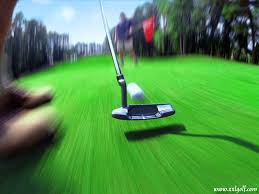
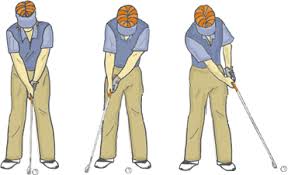
The Science of golf putting is a mechanical action which requires taking the correct aim, and executing or stroking the putt in a manner that can be repeated again and again.
Mechanical failure of a golf putting stroke causes you to either "push" the golf putter off of the intended line to the right or "pull" the golf putter off of the intended line to the left. "Pushed" or "Pulled" putts create sidespin on the golf ball and cause the golf ball to travel in a non-straight putting line.
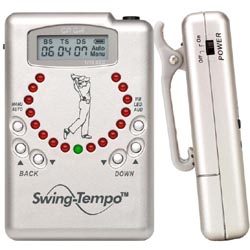
Of course, there are many research of golf science. Some of them discover tool or instrument for observe the result of swing or putting golf. Some scientist discover tool for improve the golfer performance. Some of them produce the simulator of golf and another found the game to increase the performance of golf playing.Hmm.. many topics to tell about this.
Regards
Giri